The Earth and Leaf Document Library
Earth and Leaf Editorial – Earth’s Disastrous 10th Tipping Point Has Been Identified
Aquatic Deoxygenation
Extract
- Crossing Planetary Boundaries (PB)—a concept that defines nine potential ecological “tipping points”—could spell doom for ecosystems and humanity’s future on the planet.
- Of these PBs, humans have already crossed six of the nine thresholds.
- Now, scientists are arguing that there’s potentially a tenth boundary that’s gone unrecognized, which concerns worldwide aquatic deoxygenation in lakes, reservoirs, oceans, and other bodies of water.
“Climate change” is a scary, catch-all term that summarizes all the anthropogenic degradation humans are inflicting on the planet. In reality, climate change is only one of the many threats facing the planet.
First introduced in 2009, the Planetary Boundary (PB) concept identifies nine unique thresholds that could spell disaster if humanity crosses them. While climate change is one of the nine boundaries, the list also includes things like biosphere integrity, ozone depletion, ocean acidification, freshwater change, and more. (Of course, what we think of as climate change exacerbates all of these issues, so in a sense, it remains Public Enemy No. 1.)
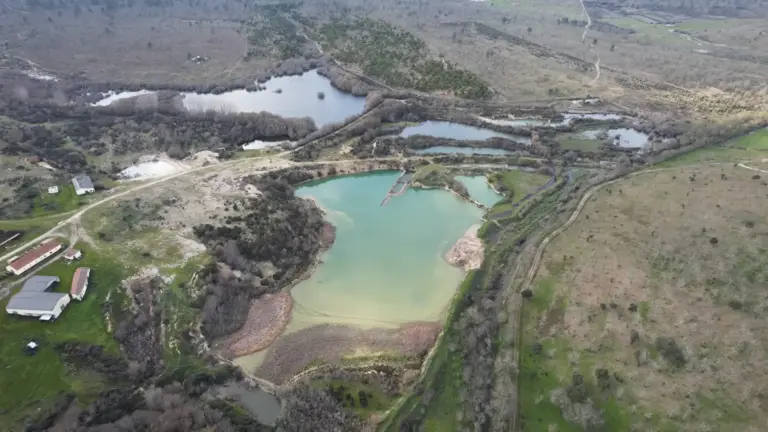
Now, scientists argue that a 10th boundary could be added to the list: aquatic deoxygenation. Some bodies of water in the world (such as basins in the Black Sea, the Baltic Sea, and various fjords) are naturally anoxic, meaning that they contain little or no oxygen. But widespread deoxygenation is different, as it affects previously oxygenated bodies of water globally and to varying degrees.
Links to Other Relevant Stories and Sites
-
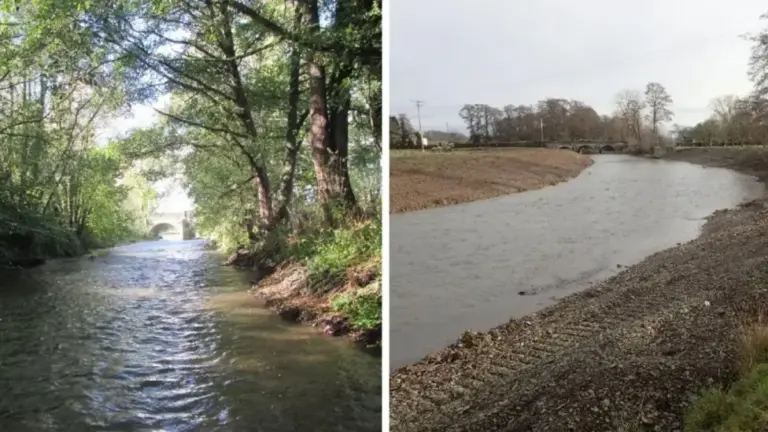
Aquatic Deoxygenation – Windermere a Great Example
-
Science Lies at the Very Heart of our Being
-
Science and the Environment from Popular Mechanics
Thank you for reading. There are many more interesting articles in the Earth and Leaf Library.
More . . . . .
Unbearable Heat – Heat with no end: climate model sets out an unbearable future for parts of Africa
Biodiversity loss ‘threat to security’
The Guardian view on risks from biodiversity collapse: warnings must be heeded before it’s too late
The Cost of Community Conservation in the Amazon
Are Wood Pellets Worth Billions In Subsidies? Drax Faces A Reckoning
Toby Carvery restaurant facing eviction over felling of ancient oak tree
Amol Rajan talks to Chris Packham – Radical
First Climate Tipping Point Reached
Japan has opened its first osmotic power plant
The Appalling Effects of Bottom Trawling
Earth and Leaf would like to acknowledge the great work done by the many journalists, scientists, photographers and contributing organisations that we showcase in our Library. We credit these contributors. We could not make a contribution to this critical work without their hard work and dedication.
Earth and Leaf Editorial – An Unbearable Heat
Much of Africa will become uninhabitable, not just for humanity. The cooling and climate effects of trees are all too apparent. We must end large scale ruminant livestock farming and return to the forests. Trees take up Carbon and moderate unbearable heat.
Extract
People often think of a heatwave as a temporary event, a brutal week of sun that eventually breaks with a cool breeze. But as the climate changes globally, in parts of Africa, that level of heat is becoming a permanent part of the weather.
Research shows Africa’s exposure to dangerous heat is rising rapidly. Until now, estimating how severe this heat would become was challenging. This was because many widely used global climate models struggled to capture the local factors that shape heat in Africa’s diverse climate zones and habitats (humid tropics, dry savannas and rapidly changing agricultural areas).
It is very important to analyse how these different local factors cause dangerous heat because they all play a role in causing it. For example, rapid changes to the way land is used, such as deforestation, alter soil moisture and humidity. Turning forests into crop land therefore becomes a driver of extreme heat.
Read more: Heat and health: Dar es Salaam’s informal settlements need help
We are a team of hydroclimate and land-atmosphere scientists who study heat extremes, water resources, the way land use changes, and hydroclimate risk. We set out to produce reliable, locally relevant projections of future heatwaves. Our team realised that to understand the true heatwave risk in Africa, we had to look down as well as up. It is not only the warming atmosphere from above, it is also the way people are transforming the land below.
To better understand how heat is likely to affect African countries, and to avoid relying on any single climate model, we developed a framework built on four pillars:
-
To get the most accurate data, we studied 10 global climate models rather than betting on one model.
-
The global climate model outputs were adjusted so they matched observed heatwave patterns (the frequency, duration, magnitude, amplitude, number and timing of heatwaves) and showed the links between temperature, wind, radiation and humidity.
-
Artificial intelligence (AI) was used to quantify how much the different drivers of heat (such as temperature, humidity, soil moisture, wind, radiation, land use) contributed to heatwave changes. We also used AI to highlight how these drivers made heat worse when they interacted.
-
We compared what would happen in a high-pollution future as opposed to one where governments and industry managed to reduce carbon emissions.
Our research found that by the late 21st century, most regions in Africa will stop having occasional heatwaves and will suffer from extreme heat lasting most of the year. The study shows that by 2065-2100, many parts of Africa (apart from Madagascar) could experience heatwaves on 250-300 days per year.
Links to Other Relevant Stories and Sites
-
Its not just Africa that will Suffer Unbearable Heat but our Oceans too
-
Unbearable Heat is Evidence we have Reached another Climate Tipping Point
-
African Children
Thank you for reading. There are many more interesting articles in the Earth and Leaf Document Library.
Earth and Leaf Editorial – Flawed Economic Models will Lead to Global Crash
About time someone else realised that we use flawed economic models. Our current Economic teaching includes externalities. These are costs for someone else to bear. The theory only needs a tweak, the consequences of that tweak are unimaginably serious. Economists have always recognised these climate costs, but until now they haven’t been able to include them in their thinking.
So they were called Externalities.
They are now measurable costs. So the polluter must pay.
Extract
States and financial bodies using modelling that ignores shocks from extreme weather and climate tipping points.
Flawed economic models mean the accelerating impact of the climate crisis could lead to a global financial crash, experts warn.
Recovery would be far harder than after the 2008 financial crash, they said, as “we can’t bail out the Earth like we did the banks”.
As the world speeds towards 2C of global heating, the risks of extreme weather disasters and climate tipping points are increasing fast. But current economic models used by governments and financial institutions entirely miss such shocks, the researchers said, instead forecasting that steady economic growth will be slowed only by gradually rising average temperatures. This is because the models assume the future will behave like the past, despite the burning of fossil fuels pushing the climate system into uncharted territory.
Tipping points, such as the collapse of critical Atlantic currents or the Greenland ice sheet, would have global consequences for society. Some are thought to be at, or very close to, their tipping points but the timing is difficult to predict. Combined extreme weather disasters could wipe out national economies, the researchers, from the University of Exeter and financial thinktank Carbon Tracker Initiative, said.
Their report concludes governments, regulators and financial managers must pay far more attention to these high impact but lower likelihood risks, because avoiding irreversible outcomes by cutting carbon emissions is far cheaper than trying to cope with them.
“We’re not dealing with manageable economic adjustments,” said Dr Jesse Abrams, at the University of Exeter. “The climate scientists we surveyed were unambiguous: current economic models can’t capture what matters most – the cascading failures and compounding shocks that define climate risk in a warmer world – and could undermine the very foundations of economic growth.”
Links to Other Relevant Stories and Sites
-
We have been banging this drum for ages – A New (Reformed) Economics is Needed
-
Flawed Economic Models Need no Longer Apply
-
Degrowth is an Option
Thank you for reading. There are many more interesting articles in the Earth and Leaf Library.
More . . . . .
Unbearable Heat – Heat with no end: climate model sets out an unbearable future for parts of Africa
Biodiversity loss ‘threat to security’
The Guardian view on risks from biodiversity collapse: warnings must be heeded before it’s too late
The Cost of Community Conservation in the Amazon
Are Wood Pellets Worth Billions In Subsidies? Drax Faces A Reckoning
Toby Carvery restaurant facing eviction over felling of ancient oak tree
Amol Rajan talks to Chris Packham – Radical
First Climate Tipping Point Reached
Japan has opened its first osmotic power plant
The Appalling Effects of Bottom Trawling
Scotland feeds people, England feeds birds
Earth and Leaf would like to acknowledge the great work done by the many journalists, scientists, photographers and contributing organisations that we showcase in our Library. We credit these contributors. We could not make a contribution to this critical work without their hard work and dedication.
Earth and Leaf Editorial – Biodiversity Loss
This Biodiversity Loss article from the Ecologist is terrifying. Such is the impact of this article we are making it pillar content. The government didnt want you, the public, or us, to see this report.
The government must act. We must work with the European Union very closely on this. In fact we need to rejoin the EU as a matter or urgency and national security.
Read on. The science and fact behind this is absolutely solid.
Extract
The British government’s own security experts join the dots between nature loss, security and the wellbeing of society. Global ecosystem degradation and collapse threaten British national security and prosperity. This is the conclusion of a UK Government assessment of the implications of biodiversity collapse on the country’s national security.
It notes that the world is already experiencing impacts including crop failures, intensified natural disasters and infectious disease outbreaks.
READ: George Monbiot – The UK government didn’t want you to see this report on ecosystem collapse. I’m not surprised.
These threats will increase with degradation and intensify with collapse, it states. Without major intervention to reverse the current trend, this is highly likely to continue to 2050 and beyond, it adds.
Extinction
The assessment notes that ecosystem degradation is occurring across all global regions, adding that every critical ecosystem is on a pathway to irreversible loss of function beyond repair.
It cites the fact that average size of monitored wildlife populations declined by 73 per cent between 1970 and 2020.
Populations of vertebrate species have declined by an average of 68 per cent since 1970, while freshwater ecosystem species populations have shown the largest losses, falling 84 per cent in the same period.
“The rate of extinction is tens to hundreds of times higher than the average over the past ten million years. It suggests that a sixth mass extinction may be underway,” it states.
Delayed
The assessment was led by the environment department (DEFRA) and sought expertise across government, including the Ministry of Defence and the Joint Intelligence Committee, which advises on tactical and strategic issues of importance to national interests, primarily in terms of security, defence and foreign affairs.
It was due to be published ahead of COP30, but was delayed. It was finally made public after a Freedom of Information (FoI) request by think tank the Green Alliance.
Ruth Chambers, senior fellow with Green Alliance, who made the FoI request, said that the assessment joins the dots between nature loss, security and the wellbeing of society as a whole.
“It makes for stark reading as it is clear that biodiversity loss is a global threat and that ecosystem degradation is happening everywhere,” she said.
Links to Other Relevant Stories and Sites
Thank you for reading. There are many more interesting articles in the Earth and Leaf Library.
More . . . . .
Flawed Economic Models
Biodiversity loss ‘threat to security’
The Guardian view on risks from biodiversity collapse: warnings must be heeded before it’s too late
Eating Less Beef
The Cost of Community Conservation in the Amazon
Are Wood Pellets Worth Billions In Subsidies? Drax Faces A Reckoning
Earth – with Chris Packham
Toby Carvery restaurant facing eviction over felling of ancient oak tree
Costa Rica’s Cloud Forests
Deer herds need to be culled
Amol Rajan talks to Chris Packham – Radical
First Climate Tipping Point Reached
The Argyll Street Ash
Japan has opened its first osmotic power plant
The Appalling Effects of Bottom Trawling
Ban Driven Grouse Shooting
Would you eat a Cockroach
Randy Borman
Scotland feeds people, England feeds birds
Worlds Hottest Year
Earth and Leaf would like to acknowledge the great work done by the many journalists, scientists, photographers and contributing organisations that we showcase in our Library. We credit these contributors. We could not make a contribution to this critical work without their hard work and dedication.
Earth and Leaf Editorial – Risks from Biodiversity Collapse
Inadequate food supplies and biodiversity collapse in rainforests must be recognised as national security threats – not pigeonholed as green issues.
This bears repeating from the full text. One of our biggest hurdles is getting past politicians that dismiss the disasters we are trying to address as “green issues” or “Con Jobs”.
Biodiversity collapse is a far bigger global problem than the war in Ukraine or any perceived threat from Iran.
Read on, absorb the stark conclusions and join Earth and Leaf if you want to help.
Extract
Inadequate food supplies and collapsing rainforests must be recognised as national security threats – not pigeonholed as green issues.
cosystems and national security used not to be mentioned in the same breath all that often – unless environmental campaigners were doing the talking. For years, climate and nature experts have struggled to get across the message that species extinctions, dead rivers and deforestation are an existential threat to people as well as animals and plants. As George Monbiot wrote last week, the publication of a government report thought to have been authored by intelligence chiefs, about the threats to the UK’s national security from biodiversity collapse, should be viewed as a step forward. The risks have become too extreme to be ignored.
The document is a national security assessment, not a scientific report. The data that it relies on comes from other sources. But the warnings that it contains about the UK’s heavy dependence on food and fertiliser imports, and the probable consequences of nature depletion, must be heeded. Originally due to be published in the autumn, the review appears to have had some sections removed. An earlier version is reported to have included warnings about the risks of “eco-terrorism” and the growing likelihood of war between China, India and Pakistan due to competition over a shrinking water supply from the Himalayas.
The climate secretary, Ed Miliband, is one of the cabinet’s most experienced politicians. On carbon emissions targets, Labour has largely stuck to its guns and not allowed the siren voices of the populist right to undermine the UK’s green transition. By contrast, Kemi Badenoch’s pledge to repeal the Climate Change Act was arguably her most reckless decision since becoming Tory leader. But under this government, as under previous ones, the rest of the environment agenda is much lower-profile – with the arguable exception of the sewage crisis and failing water companies. The environment secretary, Emma Reynolds, has only been in her first cabinet job for five months.
The framing of nature loss as a national security issue should help to focus minds across government. Food and energy security are among areas where policy action is most urgently needed. But in our era of climate breakdown, no area of human activity is insulated.
Links to Other Relevant Stories and Sites
-
Biodiversity Collapse, Boiling Frogs
-
The Pantanal , Noahs Ark
-
The Ecologist on Biodiversity Collapse
-
We are Members of the Rainforest Alliance
Thank you for reading. There are many more interesting articles in the Earth and Leaf Library.
More . . . . .
Biodiversity loss ‘threat to security’
The Guardian view on risks from biodiversity collapse: warnings must be heeded before it’s too late
The Cost of Community Conservation in the Amazon
Are Wood Pellets Worth Billions In Subsidies? Drax Faces A Reckoning
Toby Carvery restaurant facing eviction over felling of ancient oak tree
Amol Rajan talks to Chris Packham – Radical
First Climate Tipping Point Reached
Japan has opened its first osmotic power plant
The Appalling Effects of Bottom Trawling
Scotland feeds people, England feeds birds
Earth and Leaf would like to acknowledge the great work done by the many journalists, scientists, photographers and contributing organisations that we showcase in our Library. We credit these contributors. We could not make a contribution to this critical work without their hard work and dedication.
Earth and Leaf Editorial – Eating Less Beef
At Earth and Leaf we are absolutely passionate about the world population eating less beef. For example McDonalds uses 35000 cattle a day worldwide. We are fighting to educate everyone on this issue, so this article is a joy to read: Enjoy !
Extract
“I love beef,” says Vlad Luca, 25. But unlike most other self-proclaimed steak lovers, Vlad eats it only four times a year, on designated “beef days”.
The “beef days” phenomenon has been popularised by the brothers John and Hank Green, known collectively as vlogbrothers on YouTube. John, 48, is better known for his YA fiction, including The Fault in Our Stars, while Hank, 45, is a self-described science communicator and entrepreneur.
They have been making videos on their shared channel since 2007, and have more than 4 million subscribers. In June 2024, John posted a video announcing that “an idea inspired by early modern humans” – feast days – had pushed him to commit to eating less beef.
John did not want to give up beef entirely, but he feared the impact of the beef industry on the Paris agreement’s limit of 1.5C of post-industrial global heating and the devastating effects of beef farming on deforestation.
He compared the overconsumption of beef to the “coolness” of tobacco back in the day: “Norms feel permanent, but norms can change and when they do it can be powerful,” he said.
Links to Other Relevant Stories and Sites about Eating Less Beef
Thank you for reading. There are many more interesting articles in the Earth and Leaf Document Library.
More . . . . .
Unbearable Heat – Heat with no end: climate model sets out an unbearable future for parts of Africa
Flawed Economic Models
Biodiversity loss ‘threat to security’
The Guardian view on risks from biodiversity collapse: warnings must be heeded before it’s too late
Eating Less Beef
The Cost of Community Conservation in the Amazon
Are Wood Pellets Worth Billions In Subsidies? Drax Faces A Reckoning
Earth – with Chris Packham
Toby Carvery restaurant facing eviction over felling of ancient oak tree
Costa Rica’s Cloud Forests
Deer herds need to be culled
Amol Rajan talks to Chris Packham – Radical
First Climate Tipping Point Reached
The Argyll Street Ash
Japan has opened its first osmotic power plant
The Appalling Effects of Bottom Trawling
Ban Driven Grouse Shooting
Would you eat a Cockroach
Randy Borman
Scotland feeds people, England feeds birds
Earth and Leaf would like to acknowledge the great work done by the many journalists, scientists, photographers and contributing organisations that we showcase in our Library. We credit these contributors. We could not make a contribution to this critical work without their hard work and dedication.
Earth and Leaf Editorial – Community Conservation
Community Conservation in the Amazon. Mongabay is such a great source of information. This is a great project which in time we would love to help support financially. The world needs to look at just transition for these fishermen. Read on….

Extract
- In Brazil’s western Amazon, community-led efforts to protect the pirarucu, one of the world’s largest freshwater fish, bring conservation benefits that extend into upland ecosystems.
- A study in Nature Sustainability found that by patrolling oxbow lakes along the Juruá River, communities effectively protect a mean area 86 times larger than the lakes they directly monitor, making this the largest community-based conservation initiative in the Brazilian Amazon.
- Local families bear the full economic burden of conservation efforts; surveillance represents 32% of total costs and reduces community income by 21%. Researchers say that using payments for environmental services would help ease pressure on communities.
In rural communities living near Brazil’s Juruá River, a tributary of the Amazon River that flows northward through the country, families of fishers take turns in guarding the entrances of oxbow lakes. The most sinuous river in the Amazon Basin, the Juruá, meanders through low-lying floodplains, creating numerous stagnant water bodies. From small wooden watchtowers built on the water, the community members watch for poachers who seek to illegally harvest pirarucu (Arapaima gigas), the largest freshwater fish species in the Amazon and a staple species for communities’ food security.
A study published in Nature Sustainability found that these community conservation efforts benefit not only pirarucu and oxbow lakes, but also connect floodplain and upland ecosystems. By limiting access to outsiders, confiscating poaching equipment and reporting illegal activity to government agencies, community members effectively protect natural resources and their own livelihoods. However, this work comes at a substantial cost, researchers found. While on patrol, guards cover the expenses of surveillance, spend days away from their jobs and risk dangerous encounters with poachers, all without pay.
A broader conservation footprint
Community conservation is a strategy that places local communities at the center of managing and protecting natural resources, rather than excluding them. While it involves collaboration among community members, researchers and government agencies, its success comes from local knowledge and community-driven collective action. Conservation goals prioritize the protection of both biodiversity and local livelihoods.
Links to Other Relevant Stories and Sites
Thank you for reading. There are many more interesting articles in the Earth and Leaf Library.
More . . . . .
Flawed Economic Models
Biodiversity loss ‘threat to security’
The Guardian view on risks from biodiversity collapse: warnings must be heeded before it’s too late
Eating Less Beef
The Cost of Community Conservation in the Amazon
Are Wood Pellets Worth Billions In Subsidies? Drax Faces A Reckoning
Earth – with Chris Packham
Toby Carvery restaurant facing eviction over felling of ancient oak tree
Costa Rica’s Cloud Forests
Deer herds need to be culled
Amol Rajan talks to Chris Packham – Radical
First Climate Tipping Point Reached
The Argyll Street Ash
Japan has opened its first osmotic power plant
The Appalling Effects of Bottom Trawling
Ban Driven Grouse Shooting
Would you eat a Cockroach
Randy Borman
Scotland feeds people, England feeds birds
Worlds Hottest Year
Earth and Leaf would like to acknowledge the great work done by the many journalists, scientists, photographers and contributing organisations that we showcase in our Library. We credit these contributors. We could not make a contribution to this critical work without their hard work and dedication.
Earth and Leaf Editorial – Are Wood Pellets Worth Billions in Subsidies?
Drax – the subsidy for Canadian wood pellets is a disgusting waste of money and an international carbon fraud.
This doesn’t count towards the UK Carbon Budget because its Canadian. It doesn’t count in Canada either. This is green washing on a monumental scale. This is not renewable energy – those old growth forests cannot be replaced.
Drax is one of the great carbon scandals of our era.
Extract
Lorem ipsum dolor sit amet, consectetur adipiscing elit. Ut elit tellus, luctus nec ullamcorper mattis, pulvinar dapibus leo.
Links to Other Relevant Stories and Sites
Thank you for reading. There are many more interesting articles in the Earth and Leaf Library.
More . . . . .
Aquatic Deoxygenation
Unbearable Heat – Heat with no end: climate model sets out an unbearable future for parts of Africa
Flawed Economic Models
Biodiversity loss ‘threat to security’
The Guardian view on risks from biodiversity collapse: warnings must be heeded before it’s too late
Eating Less Beef
The Cost of Community Conservation in the Amazon
Are Wood Pellets Worth Billions In Subsidies? Drax Faces A Reckoning
Earth – with Chris Packham
Toby Carvery restaurant facing eviction over felling of ancient oak tree
Costa Rica’s Cloud Forests
Deer herds need to be culled
Amol Rajan talks to Chris Packham – Radical
First Climate Tipping Point Reached
The Argyll Street Ash
Japan has opened its first osmotic power plant
The Appalling Effects of Bottom Trawling
Ban Driven Grouse Shooting
Would you eat a Cockroach
Randy Borman
Here is a quotation that really sets the scene for our mission:
(from) Earth (a BBC production)
“Now Ive seen so much of the natural world that I cherish destroyed, that it’s difficult not to be pessimistic, but ironically, when I go searching for home, I don’t turn to those planetary forces, I turn to the power of humanity.
Because for all of our flaws, all of our foolishness, we are a truly remarkable species; adaptable, resourceful, inventive, intelligent, creative. And you might argue that our most significant turning points were perhaps standing up on two legs and beginning to walk or drawing those animals on the cave walls, or inventing farming, or even landing on the moon: but I need to argue that these were just our dress rehearsals.
Because in the very near future our species will need to reach the zenith of its’ achievements and that all humanity will have to learn to put our earth first. That unique fragile beautiful earth that for more than four billion years has been forming this stage on which we now stand and it’s waiting for our finest performance. And if we don’t pull it off then of course life on this planet will continue to prosper, but there will be no encore for humanity.”
Chris Packham, Earth, 2023
Earth, presented and co-written by Chris Packham is a must watch for everyone. It is a BBC 2023 production. Search for it on the iplayer or just click here!
Earth and Leaf Editorial – Cloud Forests and Climate Change
We don’t know whether Costa Rica’s cloud forests can cope with climate change. We need to try very hard not to find out. They are incredibly important biodiverse entities. Lets work hard and lets hope …
Extract
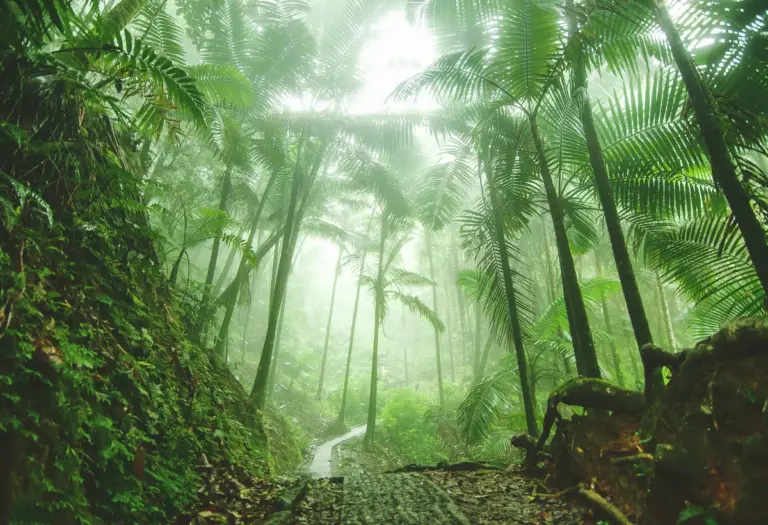
Shrouded in mist, dripping with water and boasting an extraordinary richness of plant and animal life, the cloud forests of Monteverde in north-western Costa Rica offer a glimpse into what seems like another world.
With vines curling down from the trees, and orchids and ferns in abundance, it is no surprise that the forests are home to well over 2,000 species of plants.
Animal life is also plentiful, and tourists often hope to catch a glimpse of the resplendent quetzal, a bird famed for its iridescent green and red plumage and the male’s elaborately long tail feathers.
Climate change is, however, putting in doubt the future of cloud forests in Costa Rica and elsewhere in Latin America.
Tour guides in the cloud forests, which are easily reachable on foot from the main town in Monteverde, tell visitors that these habitats are migrating to higher altitudes as the climate changes.
The threat posed by climate change was identified at least 25 years ago, and in recent years the impact has become increasingly apparent.
“It’s very likely that the overall area of cloud forests will be reduced, because the conditions that create them are changing. The clouds are moving up,” said Gerardo Avalos, a professor of ecology at the University of Costa Rica.
“Cloud forests depend on water, on a lot of water, not only in the atmosphere but in the soil, on the ground. And the flora has been adapted to these high levels of humidity.
“What we see now: the dry season is getting drier, the wet season is getting more intense. We have these fluctuations.”
Up in the clouds
A 2025 study by researchers based in Mexico and the United States found that cloud forests in the region have migrated upwards by between 1.8 metres and 2.7 metres per year since 1979
Links to Other Relevant Stories and Sites
-
Look at Ecuador Saving the Rainforest
-
Brazil Claims to be Making some Progress on Protecting Rainforest
-
Biodiversity Loss is a Threat to the Whole Planet
Thank you for reading. There are many more interesting articles in the Earth and Leaf Library.
More . . . . .
Biodiversity loss ‘threat to security’
The Guardian view on risks from biodiversity collapse: warnings must be heeded before it’s too late
Eating Less Beef
The Cost of Community Conservation in the Amazon
Are Wood Pellets Worth Billions In Subsidies? Drax Faces A Reckoning
Earth – with Chris Packham
Toby Carvery restaurant facing eviction over felling of ancient oak tree
Costa Rica’s Cloud Forests
Deer herds need to be culled
Amol Rajan talks to Chris Packham – Radical
First Climate Tipping Point Reached
The Argyll Street Ash
Japan has opened its first osmotic power plant
The Appalling Effects of Bottom Trawling
Ban Driven Grouse Shooting
Would you eat a Cockroach
Randy Borman
Scotland feeds people, England feeds birds
Worlds Hottest Year
Regenerative Agriculture and Soils – Best Practice
Earth and Leaf Editorial – Deer Herds need to be Culled
We revisit the topic that deer herds need to be culled time and again. There are up to 64 deer per square kilometre. The maximum recommended is ten. That is far too many with sheep there too. It needs to be less than three.
Generally we are anti hunting, not in this case. Deer Herds need to be Culled, some carcases left on the fell.
Extract
Scotland’s lost mountain woodlands could make a comeback — but only if deer populations are brought under control, according to new research.
A six-year study examined how deer management affects upland habitat and found that high deer densities severely limit the survival of dwarf birch, a native species crucial to restoring mountain woodland.
Scotland’s Highlands have some of the highest deer densities in Europe — driven by centuries of land management for sport and the absence of natural predators.
Mountain woodlands provide vital benefits, including stabilising slopes, reducing landslide risk, and cutting downstream flooding.
The research, led by PhD researcher Sarah Watts from the University of Stirling’s Faculty of Natural Sciences, revealed that when red deer numbers exceed three per square kilometre, dwarf birch planted in grassland and heath suffers heavy browsing and high mortality.
At lower densities, survival rates improve dramatically, with growth strongest in heathland.
Ms Watts said: “These findings show that blanket bog is a refuge where populations of dwarf birch have escaped overgrazing, rather than providing the ideal conditions for planting and restoration action.
“This means that Scotland’s lost mountain woodlands can return more widely if deer densities are reduced.”
She added: “Instead of being an unspoilt wilderness, the Highlands have been influenced by people for thousands of years.
“Scotland has some of the highest deer densities in Europe, due to management for sport shooting and the removal of top predators such as wolves and lynx.”
Current national targets allow up to 10 deer per square kilometre, but local figures range to more than 64 — far too high for sensitive upland habitats, the study warns.
Deer Herds Need to be Culled.
Links to Other Relevant Stories and Sites
-
Why Deer Carcases Should be Left to Rot
-
Sheep Farming Reform is long Overdue
-
Visit our Sister site, Shepherds of the Trees
-
Deer Herds Need to be Culled – Grazing Pressure
Thank you for reading. There are many more interesting articles in the Earth and Leaf Library.
More . . . . .
Biodiversity loss ‘threat to security’
The Guardian view on risks from biodiversity collapse: warnings must be heeded before it’s too late
The Cost of Community Conservation in the Amazon
Are Wood Pellets Worth Billions In Subsidies? Drax Faces A Reckoning
Toby Carvery restaurant facing eviction over felling of ancient oak tree
Amol Rajan talks to Chris Packham – Radical
First Climate Tipping Point Reached
Japan has opened its first osmotic power plant
The Appalling Effects of Bottom Trawling
Scotland feeds people, England feeds birds
Earth and Leaf would like to acknowledge the great work done by the many journalists, scientists, photographers and contributing organisations that we showcase in our Library. We credit these contributors. We could not make a contribution to this critical work without their hard work and dedication.
First Climate Tipping Point Reached – A Catastrophe for Coral Reefs
Earth and Leaf Editorial
This is the inevitable news that the first climate tipping point reached. It has come sooner than I perhaps hoped. We now have to change our behaviour.
Unless global heating is reduced to 1.2C ‘as fast as possible’, warm water coral reefs will not remain ‘at any meaningful scale’, a report by 160 scientists from 23 countries warns.
This means we must cool the planet starting now which is a phenomenal task.
Links to Other Relevant Stories
Extract
The Focus Key Word
Unless global heating is reduced to 1.2C ‘as fast as possible’, warm water coral reefs will not remain ‘at any meaningful scale’, a report by 160 scientists from 23 countries warns.
The earth has reached its first catastrophic tipping point linked to greenhouse gas emissions, with warm water coral reefs now facing a long-term decline and risking the livelihoods of hundreds of millions of people, according to a new report.
The report from scientists and conservationists warns the world is also “on the brink” of reaching other tipping points, including the dieback of the Amazon, the collapse of major ocean currents and the loss of ice sheets.
But some experts have questioned the report’s claims about the fate of coral reefs, with one saying while they are in decline there is evidence they could remain viable at higher temperatures than suggested.
Thankyou for reading. There are many more articles in the Earth and Leaf Library.
More . . . . .
First Climate Tipping Point Reached
Japan has opened its first osmotic power plant
The Appalling Effects of Bottom Trawling
Scotland feeds people, England feeds birds
Regenerative Agriculture and Soils – Best Practice
The UK Needs More Grazing Livestock
The Amazons biggest trees are dying
Remembering Gerald Durrell at 100
The Best Climate Resolution This Year
Upland farmers face huge cut in profit
Improve carcase weight and meat quality
Arctic tundra is now emitting more carbon than it absorbs, US agency says
Why grouse moors deliver more nature – opinion from the hunters
Wales is losing sheep – A great opportunity
Brazil has written to the EU to ask it hold off on implementing deforestation law
A Dazzling Victory – Argyle Street Ash in Glasgow wins tree of the year competition
Earth and Leaf Editorial
This is the story of the Argyll Street Ash. It is interesting to note that noone is complaining about subsidence or damage to foundations in this case, yet the tree could not be closer to the buildings. Too often we see homeowners complaining that a tree is damaging their property and an often mature tree unnecessarily loses its life. The Argyll Street Ash appears to be causing no such problems.
This surprises me a little as Ash trees are shallow rooted. Having said that most trees are shallow rooted, constrained by the depth of soil and clay. I suspect there is a good depth of clay soil underneath the Argyll Street Ash.
The Argyll Street Ash should now be safe from the chainsaws, for now.
Links to Other Relevant Stories
-
2024 Tree of the Year – The Skipinnish Oak
-
Planting Trees is not Enough
-
Far from Glasgow – The Amazons Biggest Trees are Dying
Extract
The Argyll Street Ash
A much-loved ash tree in the heart of Glasgow has won the annual tree of the year competition organised by the Woodland Trust.
While many trees that have featured in the competition are located in the remote British countryside, the Argyle Street ash is on one of the city’s busiest roads.
Author James Cowan described the tree in his 1951 book From Glasgow’s Treasure Chest as “quite the most graceful ash I have seen”. This is a point of pride for those who live nearby, and the quote is displayed in the pub opposite the tree.
Cowan’s book also recounts an urban legend that a sapling grew by accident when a local family returned from holiday with primrose roots, one of which contained the ash seed.
It is the only tree in the street and stands 75ft tall, casting shade on the sandstone tenement houses.
Many ash trees across the country have been felled due to the fungal disease ash dieback, which kills them. So far the Argyle Street ash, planted in the Victorian era, has survived the Clydeside blitz, recent redevelopment and the disease.
Thankyou for reading. There are many more articles in the Earth and Leaf Library.
More . . . . .
First Climate Tipping Point Reached
The Argyll Street Ash
Japan has opened its first osmotic power plant
The Appalling Effects of Bottom Trawling
Ban Driven Grouse Shooting
Would you eat a Cockroach
Randy Borman
Scotland feeds people, England feeds birds
Worlds Hottest Year
Regenerative Agriculture and Soils – Best Practice
The UK Needs More Grazing Livestock
The Amazons biggest trees are dying
Remembering Gerald Durrell at 100
The Best Climate Resolution This Year
Upland farmers face huge cut in profit
Improve carcase weight and meat quality
Arctic tundra is now emitting more carbon than it absorbs, US agency says
Why grouse moors deliver more nature – opinion from the hunters
Wales is losing sheep – A great opportunity
Brazil has written to the EU to ask it hold off on implementing deforestation law
Japan has opened its first osmotic power plant – so what is it and how does it work?
Earth and Leaf Editorial
This is the story of Japan’s first osmotic power plant. It is, it appears, a net supplier of electricity and uses the brine from a desalination plant that provides fresh water to Fukuoka. The plant uses treated wastewater and concentrated brine from a desalination plant, making it a sustainable method that produces constant, carbon-free energy. This one technology we will follow closely and post updates whenever we can.
Links to Other Relevant Stories
Extract
The Osmotic Power Plant –
The site in Fukuoka is only the second power plant of its type in the world, harnessing the power of osmosis to run a desalination plant in the city.
Japan has opened its first osmotic power plant, in the south-western city of Fukuoka.
Only the second power plant of its type in the world, it is expected to generate about 880,000 kilowatt hours of electricity each year – enough to help power a desalination plant that supplies fresh water to the city and neighbouring areas.
That’s the equivalent of powering about 220 Japanese households, according to Dr Ali Altaee from the University of Technology Sydney (UTS), who specialises in the development of alternative water sources.
While it is still an emerging technology being used only on a modest scale as yet, it does have an advantage over some other renewable energies in that it is available around the clock, regardless of the wind or weather or other conditions.
It relies simply on the mixing of fresh and salt water, so the energy flow can continue day and night, providing a steady source of electricity.
So what is osmotic power and could it be used elsewhere?
What is osmotic power?
Osmosis is the natural process where water moves across a semipermeable membrane from a less concentrated solution to a more concentrated one, in an attempt to balance the concentration on both sides.
Thankyou for reading. There are many more articles in the Earth and Leaf Library.
More . . . . .
First Climate Tipping Point Reached
The Argyll Street Ash
Japan has opened its first osmotic power plant
The Appalling Effects of Bottom Trawling
Ban Driven Grouse Shooting
Would you eat a Cockroach
Randy Borman
Scotland feeds people, England feeds birds
Worlds Hottest Year
Regenerative Agriculture and Soils – Best Practice
The UK Needs More Grazing Livestock
The Amazons biggest trees are dying
Remembering Gerald Durrell at 100
The Best Climate Resolution This Year
Upland farmers face huge cut in profit
Improve carcase weight and meat quality
Arctic tundra is now emitting more carbon than it absorbs, US agency says
Why grouse moors deliver more nature – opinion from the hunters
Wales is losing sheep – A great opportunity
Brazil has written to the EU to ask it hold off on implementing deforestation law
The Appalling Effects of Bottom Trawling
Bycatch
Up to 75% of the total catch, known as by-catch is discarded, dumped back at sea, dead for the most part. This might even include sharks, certainly the smaller ones such as young Tope or Dogfish, mammals, dolphins and turtles.
Vegetation destruction
Coral destruction
Coral is found all around the world, much is still undiscovered. All coral is already under threat from global warming. The “white sand” beaches of Western Scotland are coral. It takes tens of years to grow and is smashed and destroyed in seconds by bottom trawling.
Carbon release
Watch the video again. Sediment disturbance is one of the appalling effects of bottom trawling. Ocean floor sediment stores billions of tonnes of carbon. Bottom trawling releases that carbon.
Breeding ground destruction
The Appalling Effects of Bottom Trawling
Earth and Leaf Editorial
This is the story of the appalling effects of bottom trawling. The film extract can be downloaded on the right (rather than an article). It is the undewater equivalent of deforestation to grow Soya beans.
Links to Other Relevant Stories
Extract
The Appalling Effect of Bottom Trawling
Thankyou for watching and reading. There are many more articles in the Earth and Leaf Library.
More . . . . .
First Climate Tipping Point Reached
Japan has opened its first osmotic power plant
The Appalling Effects of Bottom Trawling
Scotland feeds people, England feeds birds
Regenerative Agriculture and Soils – Best Practice
The UK Needs More Grazing Livestock
The Amazons biggest trees are dying
Remembering Gerald Durrell at 100
The Best Climate Resolution This Year
Upland farmers face huge cut in profit
Improve carcase weight and meat quality
Arctic tundra is now emitting more carbon than it absorbs, US agency says
Why grouse moors deliver more nature – opinion from the hunters
Wales is losing sheep – A great opportunity
Brazil has written to the EU to ask it hold off on implementing deforestation law
Ban Driven Grouse Shooting
Ban Driven Grouse Shooting – End the Gaslighting
Earth and Leaf Editorial
This is the story of the Focus Keyword
Links to Other Relevant Stories
- 1
- 2
- 3
Extract
The Focus Key Word
A much-loved Focus Key Word
Thankyou for reading. There are many more articles in the Earth and Leaf Library.
More . . . . .
First Climate Tipping Point Reached
Japan has opened its first osmotic power plant
The Appalling Effects of Bottom Trawling
Scotland feeds people, England feeds birds
Regenerative Agriculture and Soils – Best Practice
The UK Needs More Grazing Livestock
The Amazons biggest trees are dying
Remembering Gerald Durrell at 100
The Best Climate Resolution This Year
Upland farmers face huge cut in profit
Improve carcase weight and meat quality
Arctic tundra is now emitting more carbon than it absorbs, US agency says
Why grouse moors deliver more nature – opinion from the hunters
Wales is losing sheep – A great opportunity
Brazil has written to the EU to ask it hold off on implementing deforestation law
Earth and Leaf Editorial – Glossary: Carbon Brief’s guide to 25 ‘climate-friendly’ farming methods
Carbon Brief tell us that global food systems are responsible for around one third of planet-warming greenhouse gas emissions each year. Does that include deforestation, transport of soya? If not then its much higher still. Lets find out. The answer? It does not include deforestation.
Extract
Global food systems are responsible for around one third of planet-warming greenhouse gas emissions each year.
Agriculture is also, by far, the biggest driver of deforestation and biodiversity loss.
Producing less meat, using less synthetic fertiliser, stopping food waste and integrating nature into farms are among the ways that scientists say can reduce environmental harms from producing food.
However, some critics of these approaches note the possible trade-offs, such as lower yields compared to “conventional” forms of intensive farming.
Various terms are used to describe these more “climate-friendly” ways of farming.
Some of these practices have set definitions and are evidence-based, while others are buzzwords whose meanings vary depending on the source. Many share similar approaches.
To break through the jargon, Carbon Brief has identified 25 commonly discussed climate-relevant farming methods and key terms.
Definitions are largely drawn from the UN Food and Agriculture Organization (FAO), the International Panel of Experts on Sustainable Food Systems (IPES-Food), the Intergovernmental Science-Policy Platform on Biodiversity and Ecosystem Services (IPBES), the US Department of Agriculture, scientific studies and NGOs.
Links to Other Relevant Stories and Sites like Carbon Brief
-
Carbon Brief – What do they do?
-
Do we Feed or Save our World?
-
Eating Less Beef is a Critical Part of Saving the World
-
Carbon Brief – Emissions from Agriculture
Thank you for reading about Carbon Brief. There are many more interesting articles in the Earth and Leaf Library.
More . . . . .
Aquatic Deoxygenation
Unbearable Heat – Heat with no end: climate model sets out an unbearable future for parts of Africa
Flawed Economic Models
Biodiversity loss ‘threat to security’
The Guardian view on risks from biodiversity collapse: warnings must be heeded before it’s too late
Eating Less Beef
The Cost of Community Conservation in the Amazon
Are Wood Pellets Worth Billions In Subsidies? Drax Faces A Reckoning
Earth – with Chris Packham
Toby Carvery restaurant facing eviction over felling of ancient oak tree
Costa Rica’s Cloud Forests
Deer herds need to be culled
Amol Rajan talks to Chris Packham – Radical
First Climate Tipping Point Reached
The Argyll Street Ash
Japan has opened its first osmotic power plant
The Appalling Effects of Bottom Trawling
Ban Driven Grouse Shooting
Carbon Brief
Would you eat a Cockroach
Earth and Leaf would like to acknowledge the great work done by the many journalists, scientists, photographers and contributing organisations that we showcase in our Library. We credit these contributors. We could not make a contribution to this critical work without their hard work and dedication.