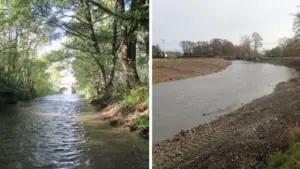
River will take decades to recover from ‘vandalism’
Earth and Leaf Editorial - River will take decades to recover
John Price has land and property worth £25 million. He felt entitled to destroy a river. He is not fit to own any land. I first reported on this two years ago, a local resident was quoted as saying the river is much better. She knew no better. Her house had been flooded before. It will again this time with John Prices help as his land will not flood which used to ease the pressure further downstream.
There is an arrogance that persists in our farming community that farmers are guardians of the countryside. That is a misconception which we will help to put right.
The Lugg was ecologically very important, but now the river will take decades to recover.
Excerpt
An ecologist says it will take 20 to 30 years for a stretch of River Lugg in Herefordshire to recover after being damaged by a local farmer.
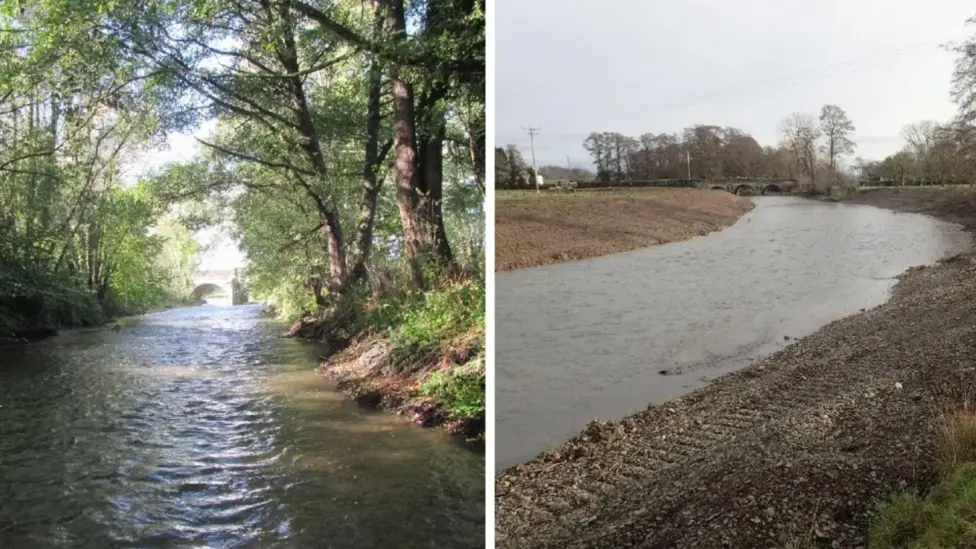
John Price was jailed in 2023 for illegally removing tonnes of gravel from the riverbed to build a road and horse yard at his home and tearing out 71 trees.
He was ordered to pay £600,000 and to restore the damage he had done.
“It’s amazing the damage that a human being can do in a very short amount of time,” said ecologist Richard Fishbourne.
The River Lugg is home to six protected and endangered species, including common otter, Atlantic salmon, white clawed crayfish, brook lamprey, shad and bullhead.
It flows into the River Wye, and in 1995 it was made a Site of Special Scientific Interest.
The farmer admitted using bulldozers and diggers to remove gravel from a mile-long stretch of the river by his farm in 2020 and 2021.
At the trial, Natural England described the damage as the “worst case of riverside destruction” seen by the organisation.
As part of his sentence, Price was ordered to re-plant trees and restore the riverbed and banks, with the Environment Agency and Natural England overseeing his work.
We visited the site with Herefordshire ecologist Richard Fishbourne, to see how the restoration project was going.
Fishbourne is an environmental designer who helps communities to restore natural spaces and work with wildlife.
“There’s no sign of life, there’s nothing in the water here now,” he said.
“Impoverished landscape – river will take decades to recover”
River gravel beds are where insects and fish lay their eggs and the young grow.
We spent two days at the site but we did not see any sign of the protected species: the Atlantic salmon, the wild brown trout, and grayling.
Fishbourne said he was worried about the lack of insects in and around the water.
“There’s nothing here, it’s an impoverished landscape really.
“I’d expect to see fish moving, fish rising, in the old days you’d see fish topping all over the place, you’d see a lot more flies as well, none of that is here anymore.”
“It takes tens of years, decades, to build up this wonderful community of species and habitat and it can all be destroyed in a moment.
“It’s going to take 20 or 30 years to come back to anywhere near the extent that it was.”
Links to Other Relevant Stories and Sites
Thank you for reading. There are many more interesting articles in the Earth and Leaf Library.
Acknowledgement
Earth and Leaf would like to acknowledge the great work done by the many journalists, scientists, photographers and contributing organisations that we showcase in the Document Library. We always credit these contributors and properly reference their work, writing and research. We could not make this project so effective without their hard work and dedication.