Oats – A Great Success Story from Caithness
Earth and Leaf Editorial - Oats – A Great Success Story
Caithness farmer grows over ten tonnes per hectare of spring oats. This is quite phenomenal but shows it can be done. He also uses virtually no fertiliser (50Kg N). This is truly sustainable farming.
Learning point – great rotations need little or no fertiliser.
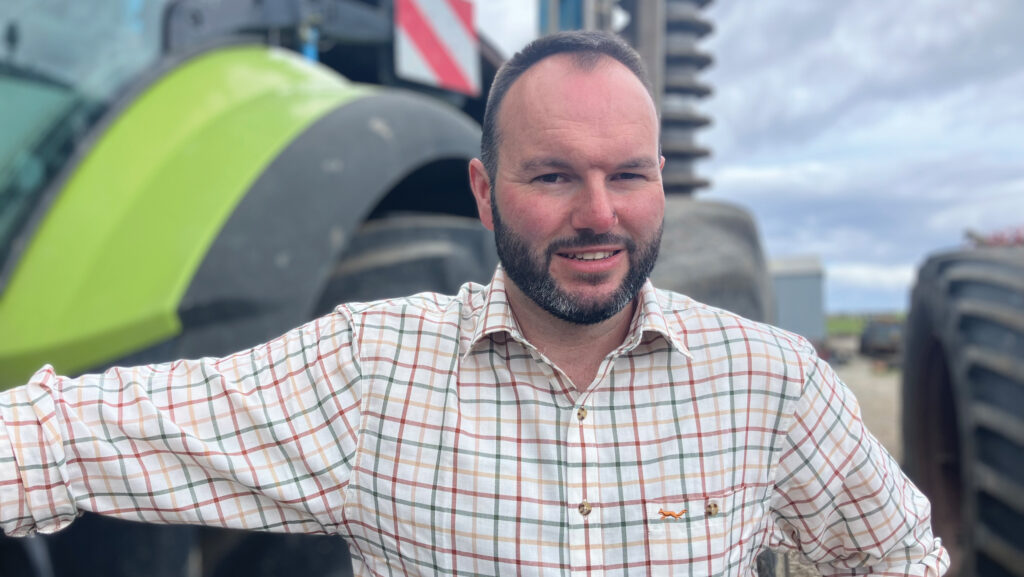
Caithness farmer grows over 10 tonnes per hectare spring oat crop.
Growing crops on the far north coast of mainland Scotland can be a challenge, with heavy rain and gusty winds often limiting establishment.
But this didn’t stop Caithness farmer John Anderson from achieving more than 10t/ha for his crop of spring oats last harvest. And the best bit? He achieved this from just 50kg/ha of bagged nitrogen.
The bumper yield saw him win gold for the highest-yielding oat crop in the 2026 YEN Awards, with the variety Merlin achieving 10.09t/ha.
See also: Whisky slowdown hits Scottish malting barley
The secret to success, says John, is mixed farming and a long rotation incorporating grass to boost soil fertility and organic matter levels.
“We typically keep grass down for 15 years for our cattle and sheep, and then do seven or eight years of cropping,” he says.
The winning oat crop was treated no different to the farm standard.
Oats have long been grown on the farm located on Scotland’s North Coast 500 route, but for the past 12 years they have been grown specifically for the gluten-free milling market.
The robust nature of the crop lends itself to the exposed coastal climate.
As oats are naturally gluten-free, preventing cereal contamination is critical, which is why they are grown after a break crop of grass. John also grows a small area of continuous oats on rented ground away from the farm.
Such long, cold winters mean spring cropping provides better returns than winter cereals.
In fact, the farm has not grown winter cereals since 1988, says fifth-generation farmer John, who works alongside his wife, Margaret, and parents John and Katrine.
Links to Other Relevant Stories and Sites
Thank you for reading. There are many more interesting articles in the Earth and Leaf Library.
Acknowledgement
Earth and Leaf would like to acknowledge the great work done by the many journalists, scientists, photographers and contributing organisations that we showcase in the Document Library. We always credit these contributors and properly reference their work, writing and research. We could not make this project so effective without their hard work and dedication.