The Doomsday Glacier – the Largest in West Antarctica
Earth and Leaf Editorial - The Doomsday Glacier
This is serious for lots of reasons. Antarctica’s fragile environment is being destroyed. Water and ice are the buffers that maintain a stable and equitable climate on our shared world. It takes a great deal of heat to melt this much ice. The latent heat of fusion uses huge amounts of energy to turn ice at 0 degrees C into water at 0 degrees C and vice versa.
The Doomsday Glacier – the Largest in West Antarctica
Antarctica’s “Doomsday Glacier” is about to lose an ice shelf that protects it from warming ocean waters, which could have devastating long-term consequences for hundreds of millions of people affected by rising sea levels.
The already-melting Thwaites Glacier is nicknamed the “Doomsday Glacier” because if it totally collapses, global sea levels would rise by 26 inches (65 centimeters) and flood coastal communities. Rising sea levels are already threatening the residents of major cities in the U.S. and throughout the world, including New York, Boston, San Francisco and Miami.
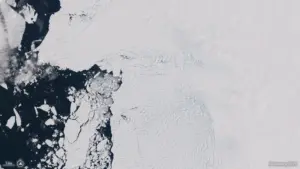
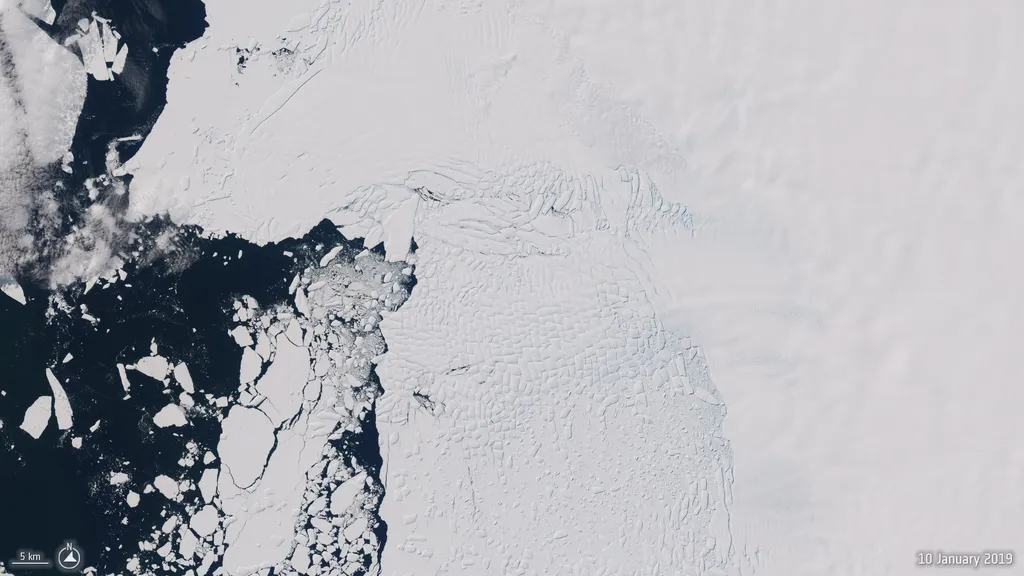
Researchers don’t expect the Florida-size glacier to collapse anytime soon, but Thwaites’ eastern ice shelf is breaking away, which will likely accelerate the glacier’s demise. The ice shelf has acted as a floating support structure, or buttress, slowing the flow of ice from the glacier, which is grounded on the Antarctic continent.
The shelf’s breakup is “very likely to happen sometime this year,” said Robert Larter, a marine geophysicist at the British Antarctic Survey (BAS), who announced that the BAS had already written the ice shelf’s “obituary.”
To discuss what the loss of the ice shelf spells for the glacier and coastal communities, Live Science spoke with Larter, who runs the U.K. arm of the science coordination office at the International Thwaites Glacier Collaboration (ITGC), where U.S and U.K. research agencies have investigated the glacier’s complex and rapidly changing environment. Here’s what he had to say.
Patrick Pester: What is happening to Thwaites Glacier?
Robert Larter: The last bit of ice shelf in front of the glacier is poised to disintegrate. We don’t know quite how this ice shelf is going to break up, but it’s definitely going to go. It’s tearing away from the glacier at the moment, and its internal structure is getting more and more fragile. You can see the fractures and rifts growing in sequences of satellite images.
Links to Other Relevant Stories and Sites
Thank you for reading. There are many more interesting articles in the Earth and Leaf Library.
Acknowledgement
Earth and Leaf would like to acknowledge the great work done by the many journalists, scientists, photographers and contributing organisations that we showcase in the Document Library. We always credit these contributors and properly reference their work, writing and research. We could not make this project so effective without their hard work and dedication.