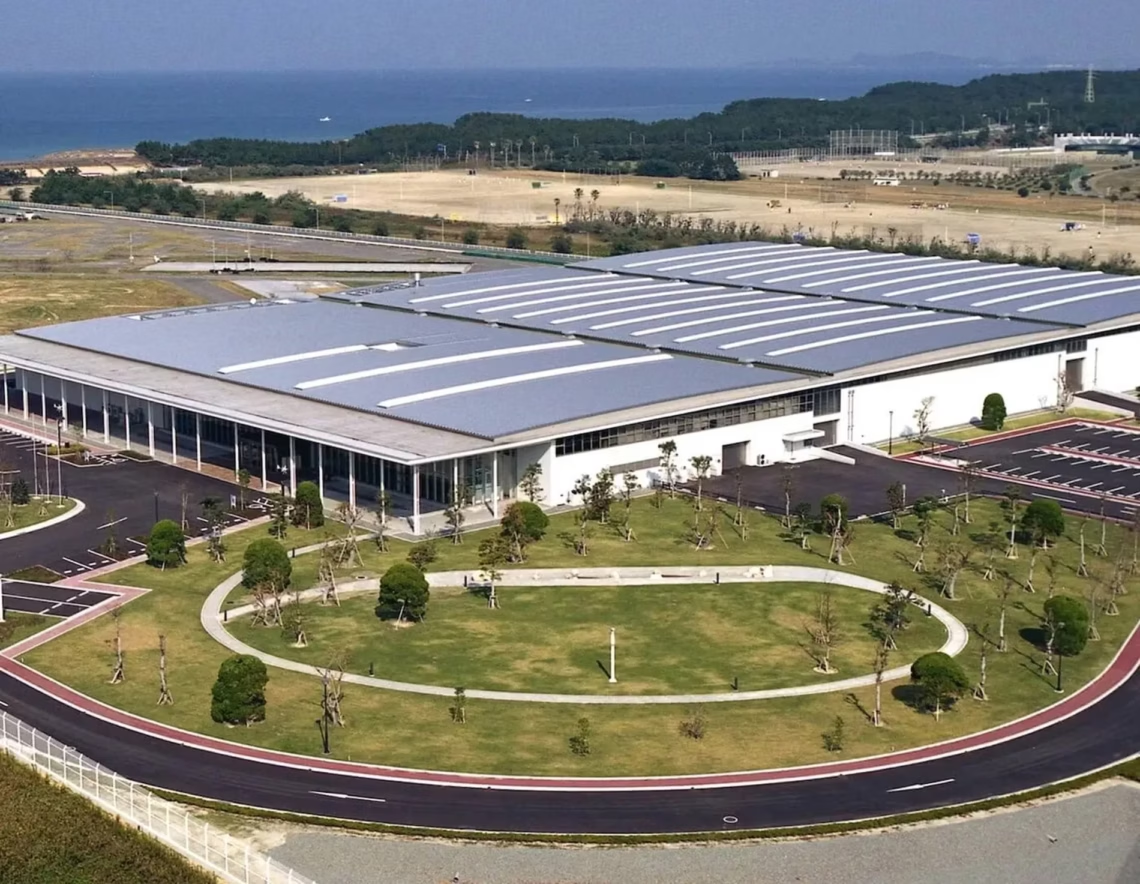
Japan has opened its first osmotic power plant
Japan has opened its first osmotic power plant – so what is it and how does it work?
Japan has opened its first osmotic power plant – so what is it and how does it work?
Earth and Leaf Editorial
This is the story of Japan’s first osmotic power plant. It is, it appears, a net supplier of electricity and uses the brine from a desalination plant that provides fresh water to Fukuoka. The plant uses treated wastewater and concentrated brine from a desalination plant, making it a sustainable method that produces constant, carbon-free energy. This one technology we will follow closely and post updates whenever we can.
Links to Other Relevant Stories

Extract
The Osmotic Power Plant –
The site in Fukuoka is only the second power plant of its type in the world, harnessing the power of osmosis to run a desalination plant in the city.
Japan has opened its first osmotic power plant, in the south-western city of Fukuoka.
Only the second power plant of its type in the world, it is expected to generate about 880,000 kilowatt hours of electricity each year – enough to help power a desalination plant that supplies fresh water to the city and neighbouring areas.
That’s the equivalent of powering about 220 Japanese households, according to Dr Ali Altaee from the University of Technology Sydney (UTS), who specialises in the development of alternative water sources.
While it is still an emerging technology being used only on a modest scale as yet, it does have an advantage over some other renewable energies in that it is available around the clock, regardless of the wind or weather or other conditions.
It relies simply on the mixing of fresh and salt water, so the energy flow can continue day and night, providing a steady source of electricity.
So what is osmotic power and could it be used elsewhere?
What is osmotic power?
Osmosis is the natural process where water moves across a semipermeable membrane from a less concentrated solution to a more concentrated one, in an attempt to balance the concentration on both sides.
Thankyou for reading. There are many more articles in the Earth and Leaf Library.

