The Cost of Community Conservation in the Amazon
Earth and Leaf Editorial - Community Conservation
Community Conservation in the Amazon. Mongabay is such a great source of information. This is a great project which in time we would love to help support financially. The world needs to look at just transition for these fishermen. Read on….

Extract
- In Brazil’s western Amazon, community-led efforts to protect the pirarucu, one of the world’s largest freshwater fish, bring conservation benefits that extend into upland ecosystems.
- A study in Nature Sustainability found that by patrolling oxbow lakes along the Juruá River, communities effectively protect a mean area 86 times larger than the lakes they directly monitor, making this the largest community-based conservation initiative in the Brazilian Amazon.
- Local families bear the full economic burden of conservation efforts; surveillance represents 32% of total costs and reduces community income by 21%. Researchers say that using payments for environmental services would help ease pressure on communities.
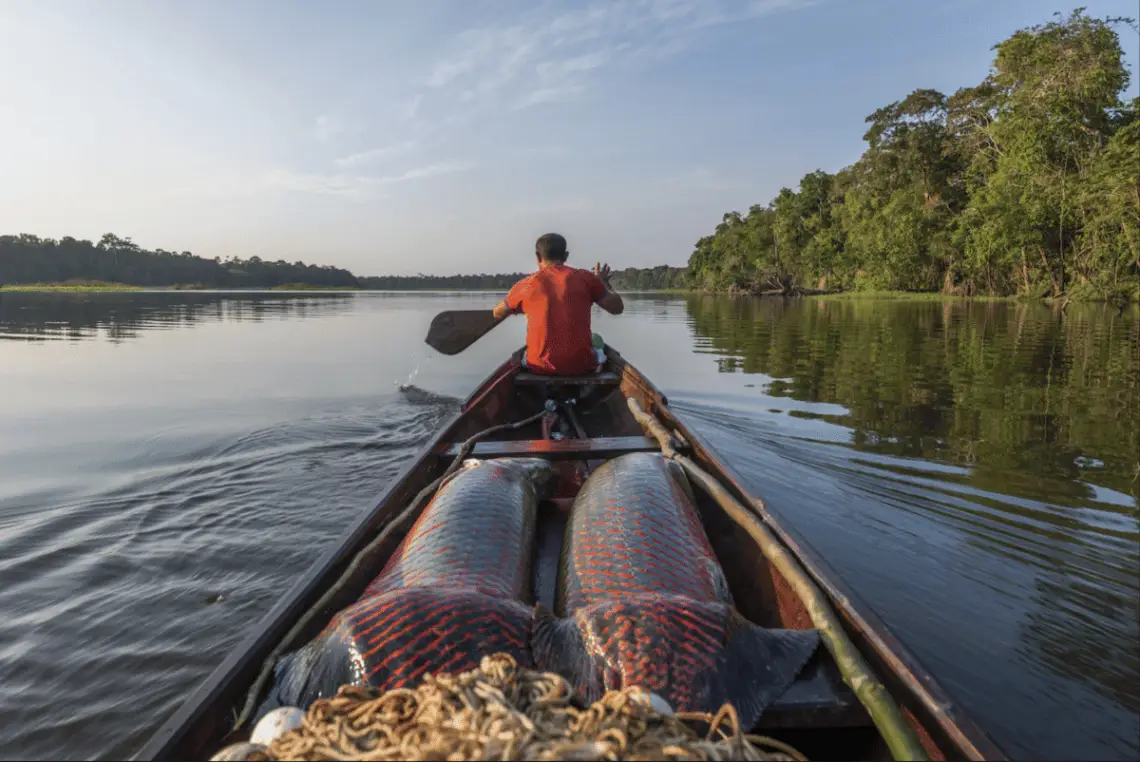
In rural communities living near Brazil’s Juruá River, a tributary of the Amazon River that flows northward through the country, families of fishers take turns in guarding the entrances of oxbow lakes. The most sinuous river in the Amazon Basin, the Juruá, meanders through low-lying floodplains, creating numerous stagnant water bodies. From small wooden watchtowers built on the water, the community members watch for poachers who seek to illegally harvest pirarucu (Arapaima gigas), the largest freshwater fish species in the Amazon and a staple species for communities’ food security.
A study published in Nature Sustainability found that these community conservation efforts benefit not only pirarucu and oxbow lakes, but also connect floodplain and upland ecosystems. By limiting access to outsiders, confiscating poaching equipment and reporting illegal activity to government agencies, community members effectively protect natural resources and their own livelihoods. However, this work comes at a substantial cost, researchers found. While on patrol, guards cover the expenses of surveillance, spend days away from their jobs and risk dangerous encounters with poachers, all without pay.
A broader conservation footprint
Community conservation is a strategy that places local communities at the center of managing and protecting natural resources, rather than excluding them. While it involves collaboration among community members, researchers and government agencies, its success comes from local knowledge and community-driven collective action. Conservation goals prioritize the protection of both biodiversity and local livelihoods.
Links to Other Relevant Stories and Sites
Thank you for reading. There are many more interesting articles in the Earth and Leaf Library.
Earth and Leaf would like to acknowledge the great work done by the many journalists, scientists, photographers and contributing organisations that we showcase in our Library. We credit these contributors. We could not make a contribution to this critical work without their hard work and dedication.


