-
Natural bridges to reconnect the last Javan gibbons
JAVA — Indonesia. Throughout the misty mountains of central Java, the call of the Javan gibbon (Hylobates moloch) once echoed throughout the forest. Today, their voices are fading. Java is one of the most densely populated regions on Earth, and decades of logging, agriculture and infrastructure development have fragmented the forest, while rampant hunting and the illegal pet trade have also taken their toll.With only an estimated 4,000 Javan gibbons left in the wild, they are now listed as endangered on the IUCN Red List. Many of the remaining populations have been left stranded in disconnected patches of forest, unable to move without uninterrupted canopy cover. Conservationists warn this isolation…
-
How Do You Grow Trees in a Treeless Land
The stark and austere landscape of Iceland is iconic and one of the most noticeable traits is a lack of trees. The Icelandic ecosystem is classified as one of the most degraded in Europe, having experienced one of the worst cases of deforestation in the world. When viking settlers first arrived in Iceland, the land was covered in birch forest. But after hundreds of years of sheep-grazing, soil erosion and eruptions, Iceland was left with just 0.5% forest cover and a big problem: how do you grow trees in one of Europe’s largest deserts? Gabrielle Lawrence heads to the remote corners of south Iceland to meet Samson Harðarson and Hrefna…
-
A Reforestation Corridor – A Future for Lemurs and Locals
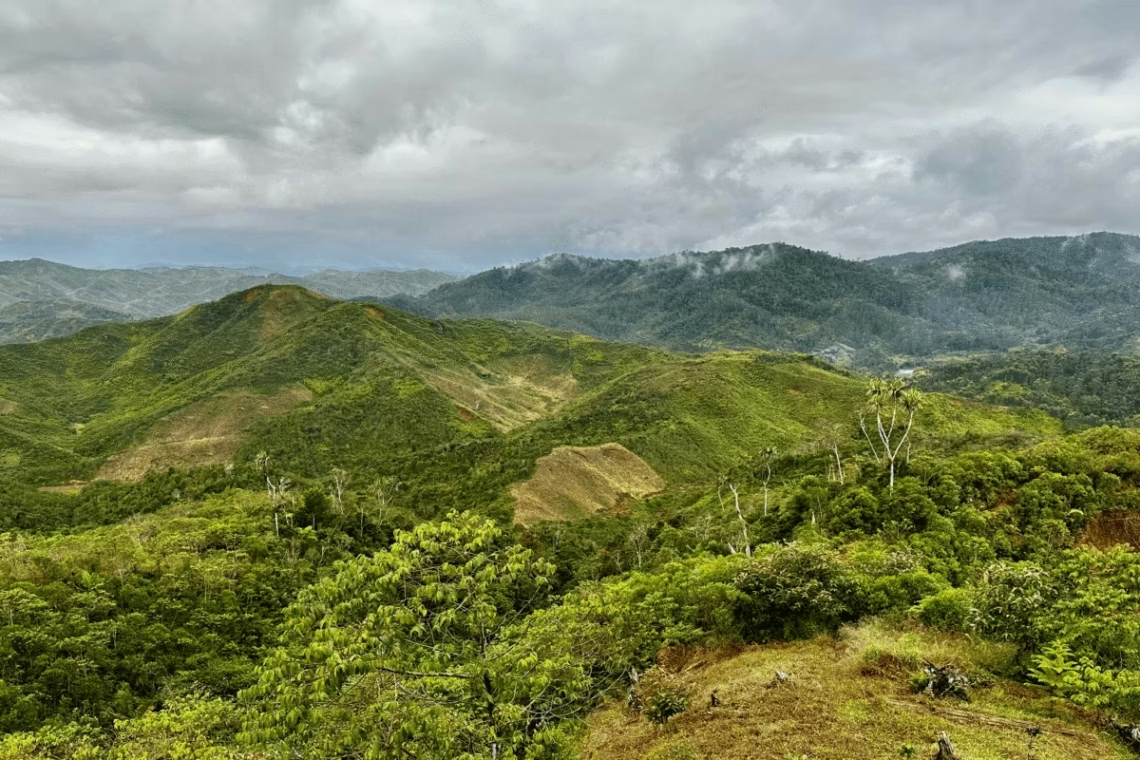
Earth and Leaf Editorial – Madagascan Reforestation Corridor This shows just what can be done. What a great story. View of the landscape where the reforestation corridor project is located in eastern Madagascar. Image courtesy of TDARFAC. Excerpt A reforestation corridor project aims to reconnect 150 hectares of fragmented forest between Andasibe-Mantadia National Park and the Analamazoatra Special Reserve, home to a dozen lemur species and many other animals and plants that are found nowhere else on Earth. Led by the Mad Dog Initiative in partnership with The Dr. Abigail Ross Foundation for Applied Conservation, Association Mitsinjo and Ecovision Village, the project represents a unique convergence of science, private…