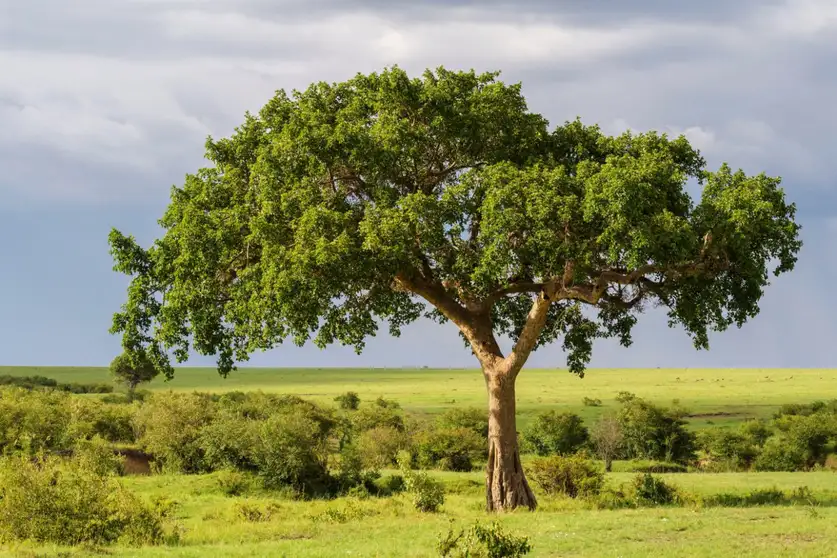
Fig trees may benefit climate by turning carbon dioxide into stone
Earth and Leaf Editorial - Fig trees may benefit climate
Excerpt
Some fig trees can convert surprisingly large amounts of carbon dioxide into stone, ensuring that the carbon remains in the soil long after the tree has died. This means that fig trees planted for forestry or their fruit could offer additional climate benefits through this carbon-sequestration process.
All trees take up CO2 from the air, and most of that carbon typically ends up as structural molecules used to build the plant, such as cellulose. Some trees, however, convert CO2 into a crystal compound called calcium oxalate, which bacteria in the tree and the soil can then convert to calcium carbonate, the main component of stones like limestone and chalk.
Carbon in mineral form can stay within soil for much longer than it can in the tree’s organic matter. The trees known to store carbon in this way include the iroko tree (Milicia excelsa), which grows in tropical Africa and is used for timber, but does not produce food.
Now, Mike Rowley at the University of Zurich in Switzerland and his colleagues have found that three species of fig tree native to Samburu County in Kenya can also make calcium carbonate from CO2.
“A large part of the trees becomes calcium carbonate above ground,” says Rowley. “We [also] see entire root structures that have pretty much turned to calcium carbonate in the soil where it shouldn’t be, in high concentrations.”
Links to Other Relevant Stories and Sites
- 1
- 2
- 3
Thank you for reading. There are many more interesting articles in the Earth and Leaf Library.
Acknowledgement
Earth and Leaf would like to acknowledge the great work done by the many journalists, scientists, photographers and contributing organisations that we showcase in the Document Library. We always credit these contributors and properly reference their work, writing and research. We could not make this project so effective without their hard work and dedication.